
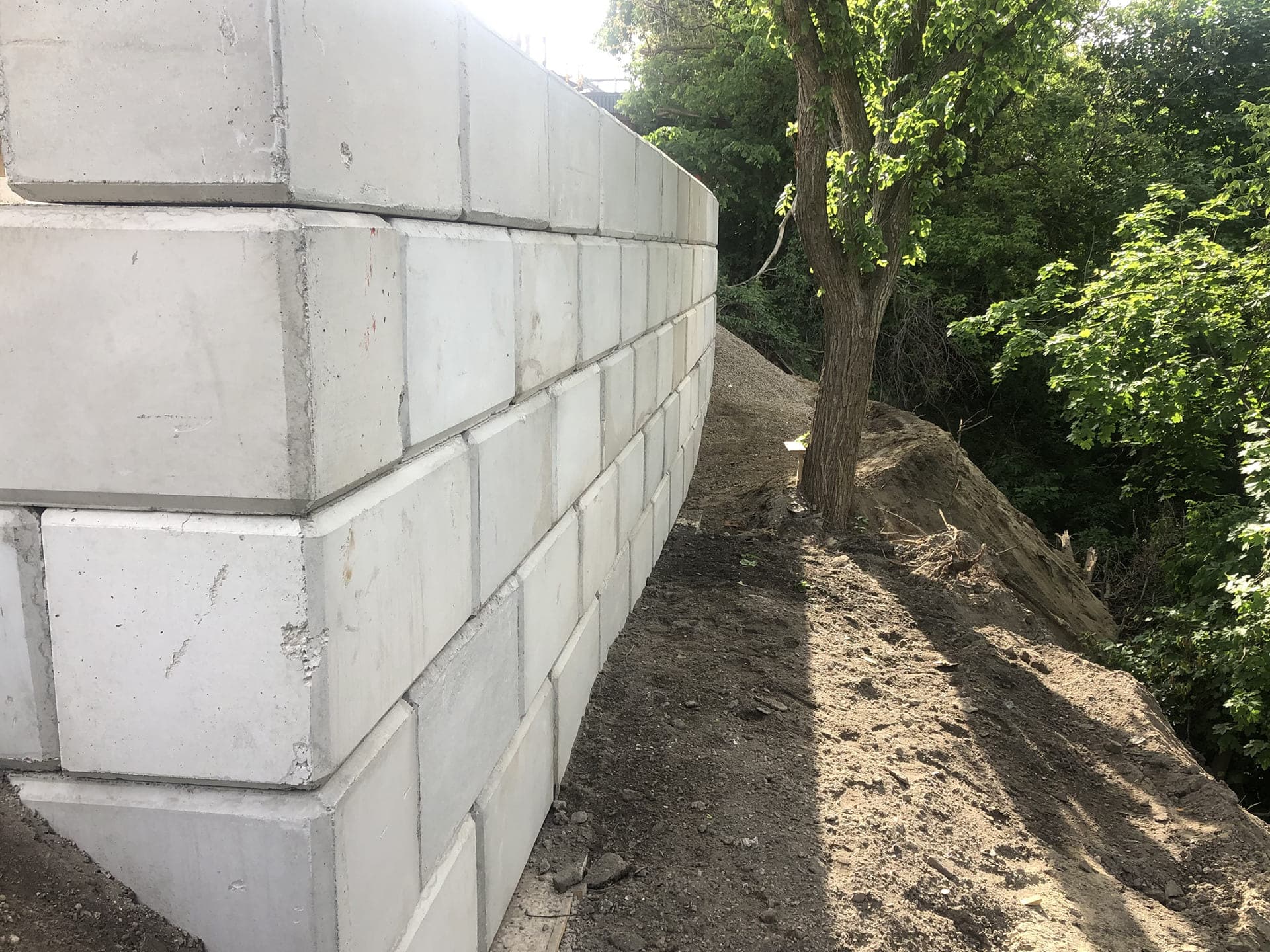
How to Fix a Damaged Retaining Wall: Complete Homeowner’s Guide
Most retaining wall problems don’t happen overnight. A crack shows up here. A section starts leaning slightly there. A few blocks shift out of place after a wet spring. It’s easy to look at these things and tell yourself it’s not that bad yet.
The issue is that retaining walls rarely get better on their own. What starts as a cosmetic problem usually has a structural cause underneath it, and that cause keeps doing its thing whether you address it or not. Knowing how to fix a retaining wall, and more importantly when and why, is what keeps a manageable repair from becoming a full rebuild.
This guide walks through how to read the warning signs, how to approach common repairs, and how to stop the same problems from coming back.
Signs Your Retaining Wall Needs Repair
Before you can figure out how to fix a retaining wall, you need to know exactly what you’re dealing with. These are the signs that tell you repair is overdue.
Leaning or tilting forward. A wall that’s moved out of plumb needs attention, even if the movement seems small. Small lean now becomes larger lean without intervention.
Horizontal cracking. This type of crack is particularly serious in concrete or block walls. It indicates the wall is bending under load, which means the forces acting on it are exceeding what it was designed to handle.
Bulging sections. A leaning wall indicates issues with its foundation or excessive soil pressure behind it. Bulging is essentially a localized version of the same problem.
Frost heave damage. In Canadian climates, frost heave is a common cause of wall movement. Frost heave occurs when water in the soil freezes and expands, causing the wall to shift or crack. Look for unevenness or raised sections. If your wall has shifted annually and come back close to its original position each spring, it may have been managing frost movement reasonably well. If it’s not coming back, that’s a different issue.
Soil separation at the base. A gap forming between the base of the wall and the surrounding soil usually means the base has shifted or settled.
Retaining Wall Repair Vs Replacement: How To Decide
Not every damaged retaining wall needs to be rebuilt. But not every damaged retaining wall can be effectively repaired either.
A few questions help clarify the decision. Is the damage localised or widespread? Is the base still stable? Was there ever a proper drainage system, and is it still functioning? What caused the damage in the first place?
If the damage is isolated, the base is solid, and you can fix the cause, repair is the right approach. If the wall has fundamental problems, either in how it was originally built or in the drainage system behind it, repair is likely to be a temporary solution. A rebuild done right is almost always more cost-effective over a ten-year view than repeated repairs to a wall that wasn’t built to last.
How To Fix A Leaning Retaining Wall
The approach to fixing a leaning retaining wall depends on how much it’s leaning and what’s behind the lean.
Small amounts of lean in walls that are otherwise stable can sometimes be addressed with tie-back systems that anchor into the hillside and pull the wall back toward vertical. These work well when the base is solid and the lean is early.
More significant lean, or lean accompanied by cracking or base movement, usually means the wall needs to come apart and go back together properly. That sounds like a bigger undertaking than it often is for smaller walls. The proper repair process involves removing damaged blocks in a V-shape pattern going two blocks wider than the damaged area, excavating old backfill material, rebuilding the base with drainage stone, and reinstalling blocks one course at a time while checking level and backfilling with clean angular gravel.
Cap blocks go on last, secured with masonry adhesive. Then the drainage system behind the wall keeps it where it’s supposed to be.
How To Fix Cracks In A Retaining Wall
Cracks in retaining walls range from cosmetic to structural, and treating a structural crack as cosmetic is one of the more common repair mistakes homeowners make.
Surface cracks in mortar joints are generally easy to address. Clean out any loose material, apply the right type of exterior masonry repair product, and the job is done. These cracks don’t usually indicate movement and don’t usually recur if the drainage is functioning correctly.
Cracks that go through the face of a block or stone, that run horizontally across the wall, or that have any visible displacement between one side and the other are different. These indicate the wall has moved. Filling the crack without addressing the movement means you’ll be back looking at the same crack, or a worse one, in a season or two.
Retaining Wall Drainage Repair
More retaining wall problems trace back to drainage than to any other single cause. Poor drainage is responsible for about 60% of leaning retaining wall problems. If you’re repairing a wall without improving the drainage behind it, you’re likely to be back doing the same repair.
A properly functioning drainage system behind a retaining wall includes three things: a perforated drainage pipe at the base of the wall, a layer of free-draining gravel (at least 12 inches thick) behind the wall face, and geotextile fabric to keep soil from migrating into the gravel layer.
Weep holes in the wall face need to be clear and functional. Improving drainage means ensuring proper grading and cleaning weep holes to prevent water pressure buildup. If weep holes are blocked, water builds up behind the wall regardless of how good the drainage layer is.
How To Prevent Future Retaining Wall Damage
Preventing retaining wall damage is mostly about not ignoring the things that cause it.
Check the wall periodically. You don’t need an engineer twice a year; a homeowner walkthrough that looks for changes is enough. Cracks that are new. Any section that looks different from how it looked six months ago. Water marks on the face of the wall that weren’t there before.
Keep drainage outlets clear. Blocked weep holes and clogged drainage pipes allow water to build up behind the wall, and water pressure is the primary cause of wall failure. Filling cracks with sealant using masonry caulk for minor cracks halts further damage and should be done promptly.
Watch what goes on top of the wall. Adding soil, large planters, or hardscape close to the top edge increases the load the wall is carrying. Any significant addition above a retaining wall is worth thinking about before it goes in.
When To Call A Professional
Some retaining wall repairs are within reach of a capable homeowner. Others genuinely aren’t, and recognizing the difference matters.
Call a professional when the wall is leaning more than a couple of inches along any significant section. When cracks are wide, horizontal, or showing any displacement. When the wall is over four feet tall and showing structural issues. When the wall is near a foundation, a driveway, or any structure that would be at risk if the wall failed. When multiple repair attempts haven’t held.
When the wall leans to more than a few inches or holds a driveway, patio or building, call a structural engineer or wall contractor. Home-based repairs may alleviate the situation for some time but it is a matter of safety.
Conclusion
Most retaining wall damage is fixable. Most retaining wall repairs that fail are ones that addressed the visible symptom without fixing the underlying cause.
Get the drainage right. Get the base right. Fix what’s actually wrong, not just what looks wrong. And inspect the wall on a schedule so small issues don’t become expensive ones.
Have Questions About Your Project?
Our team of experts is here to help you make the right decisions for your property.