
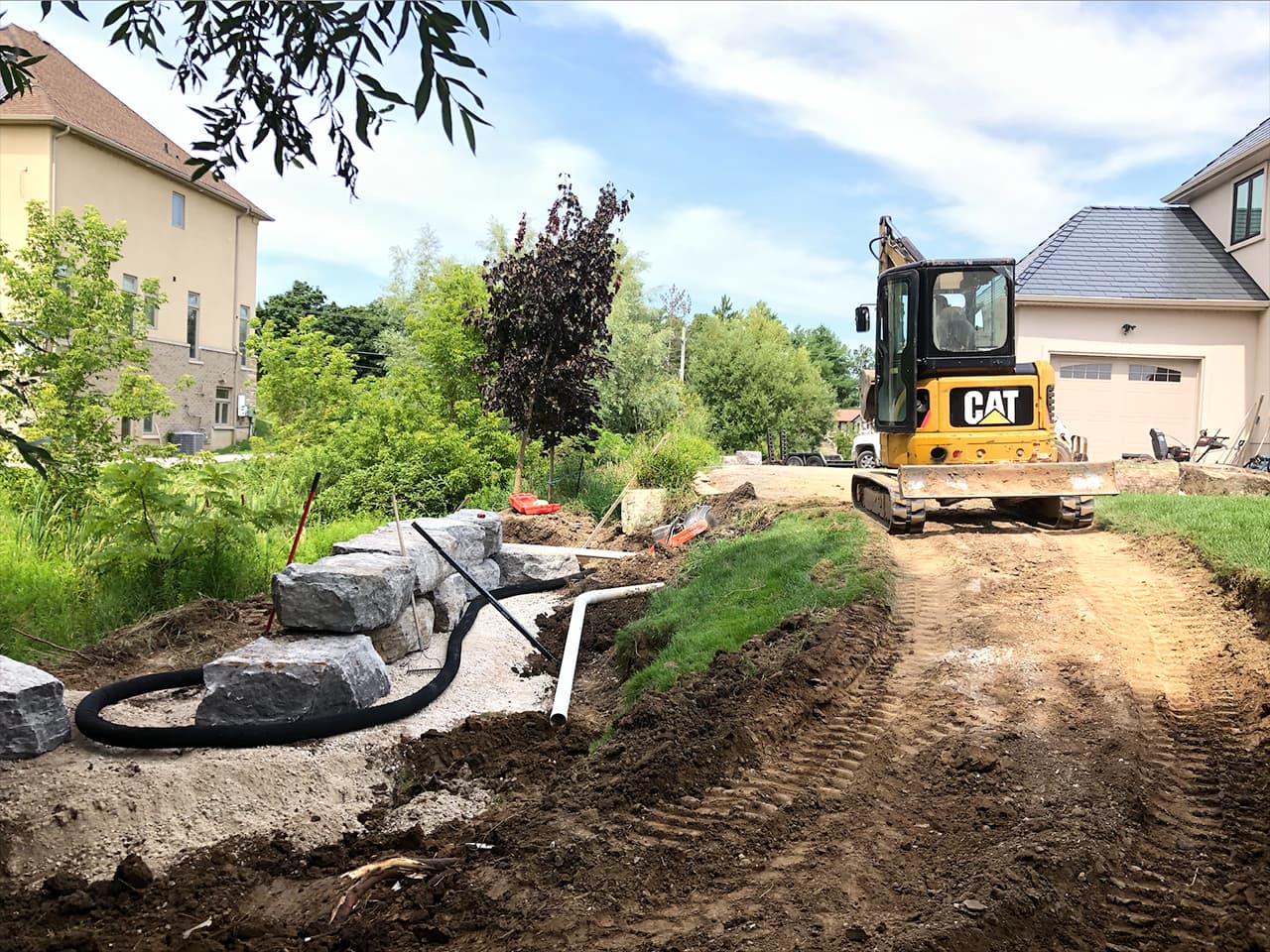
Excavation vs Grading: Key Differences Explained
When it comes to excavation vs. grading, a large number of people are very much confused. Why won’t they be? Apparently they seem like the same thing! Both equally use heavy machineries and move soil with the ultimate objective to get the land prepared. But what people don’t know is that excavation and grading have completely different purposes.
If you’re planning a construction project, managing land development, or just trying to figure out how building really starts, it’s crucial to know the difference between excavation vs grading.
You can think of it this way: one process digs deep and the other forms the surface. Let’s take it apart the right way.
What Is Excavation in Construction?
Before we can compare excavation vs grading, we need to have a clear idea of what excavation is.
Excavation is the process of digging up soil, rocks, or trash from the earth to make room for building. This is frequently done for basements, foundations, ditches, or utilities that are buried.
Digging is what excavation is all about.
This is important to know in order to understand the difference between excavation vs grading. Excavation happens at a deeper level and sets up the structural base.
Types of Excavation
Depending on the project, there are different types of excavation that can be used:
- Trench excavation (for pipelines or cables)
- Basement excavation (for building foundations)
- Cut and fill excavation (balancing soil levels)
Each type has a different job to do in the overall process of digging and grading in construction.
Equipment Used in Excavation
Heavy-duty machines are needed for excavation, such as excavators, backhoes, and trenchers.
When comparing excavation vs grading, one of the most important things to look at is how well these equipment can dig and move enormous amounts of soil.
What Is Grading in Construction?
To get the land ready for building, grading is the process of levelling and contouring the surface. Grading is different from excavation since it doesn’t dig deep; instead, it makes a smooth, solid, and appropriately slanted surface.
Grading is very important for landscaping and drainage.
In the debate between excavation vs grading, grading is all about controlling the surface.
Types of Site Grading
There are two main forms of site grading:
- Rough grading (initial shaping of land)
- Finish grading (final smoothing and preparation)
Both of these stages are necessary to make sure that the land is graded correctly for building and long-term stability.
Equipment Used for Land Grading
Grading employs different tools than digging, such as graders, bulldozers, rollers.
In the contrast between excavation vs grading, these machines are clearly different because they focus on smoothing and levelling.
Excavation vs Grading: Key Differences
Now let’s get to the main point of comparing excavation vs grading.
Purpose
The main distinction between excavation vs grading is what they are used for.
Grading is about leveling and contouring the surface, while excavation is about digging and taking things away.
Equipment Used
Another important difference between excavation vs grading is the equipment used.
Excavation employs tools for digging, such excavators, while grading uses tools for levelling, like graders and bulldozers.
Stage in Construction
Most of the time, excavation comes before grading.
When you look at excavation vs grading, it’s crucial to know the order of the steps because they both depend on each other.
Impact on Drainage
Grading is very important for drainage since it makes sure that water flows away from buildings.
Excavation makes room, while grading makes sure that water doesn’t become an issue later. This is another important difference between excavation vs grading.
Excavation vs Land Grading
Some individuals use the words “land grading” and “grading” to mean the same thing.
When talking about excavation vs. grading, land grading is getting land surfaces ready for building or landscaping. It makes sure the slope is right, the structure is stable, and the area is usable.
How Excavation and Grading Work Together
Excavation and grading in construction don’t compete with each other; they operate together.
Excavation makes the deep structural base, while grading makes the surface smoother. There can’t be a foundation if you don’t dig. There is no proper finish without grading.
It’s best to conceive of excavation and grading as two aspects of the same system.
When Is Excavation Required?
Excavation is needed when building foundations, constructing basements, and installing underground utilities.
In many cases, excavating below ground level is necessary, which is why excavation is so important in the excavation vs. grading debate.
When Is Grading Required?
Grading is a very important step in getting your land ready for building and landscaping. It is needed to shape outdoor areas, level out uneven surfaces, and make sure water drains properly. If you don’t do grading properly, water can pool in places you don’t want it to, which can cause long-term problems with the structure. Grading is what makes sure that the land is solid, evenly formed, and ready for building or landscaping. This is important when comparing excavation with grading.
The Role of Soil Testing Before Excavation and Grading
Soil testing is an important stage that should not be skipped before starting either grading or excavation. Before digging, soil testing may tell you how strong the soil is, how much weight it can hold, and how much water it has. These things are important for knowing how the land will react to stress and changes in the environment. With proper soil data, both excavation and grading can be done safely, quickly, and with long-term durability in mind.
Common Mistakes in Excavation and Grading
Even teams who have done this before can mess up.
Some common problems are too much digging, bad grading slope, and not planning for good drainage.
To grasp the difference between excavation and grading and to have a successful project, you need to avoid these blunders.
Safety Risks in Excavation and Grading
There are safety issues with both techniques.
In case of implementing both, the soil might collapse, accidents can happen with any of the equipment, and the ground condition might be unstable.
Every step of the excavation vs. grading process needs to have the right safety precautions in place.
Cost Differences Between Excavation and Grading
The costs depend on the project.
Excavation usually costs more since it requires digging deeper and using bigger machines.
Compared to that, grading will cost you less. Nevertheless, it will incur a cost that needs to be kept in your calculation as it is an unavoidable step.
If you know the cost difference, it will also help you to get a practical idea regarding excavation vs grading.
FAQs About Excavation and Grading
Which comes first: excavation or grading?
Excavation is usually the initial step in most building projects. Once the digging is done, grading is done to make the surface level and ready.
Can grading replace excavation?
No, grading can’t take the role of excavation. They both have different uses. For structural work, you need to dig, and for finishing the surface and drainage, you need to grade.
The Two Steps, Where It All Starts
At this point, you should be able to tell the difference between excavation vs grading.
Excavation is the process of digging and making space below earth, while grading is the process of shaping and levelling the ground. Both are important parts of building, and one can’t take the place of the other.
Knowing the difference between excavation vs grading not only helps you plan projects better, but it also makes sure that they are safe, stable, and efficient in the long run.
At the end of the day, great construction always starts with the ground up, and these two steps are where it all starts.
Have Questions About Your Project?
Our team of experts is here to help you make the right decisions for your property.