
What Excavation Contractors Actually Handle on Real Construction Sites (Beyond Just Digging)
Ask most people what an excavation contractor does and they’ll say something like “moves dirt around.” Which, fair enough. That’s what it looks like from the road.
But spend a day on an active excavation site and the picture gets a lot more complicated. There’s soil testing, utility locating, drainage engineering, grading calculations, permit coordination, and a dozen conversations happening between the excavation crew and every other trade waiting for the site to be ready. The digging is actually one of the simpler parts.
This guide covers what excavation contractors really do, from the moment they first walk a site to the day they hand it over to the next crew.
What Services Do Excavation Contractors Offer?
The list is genuinely longer than most people expect. Land clearing, grading, foundation digging, utility trenching, drainage systems, demolition, erosion control, access road construction, backfilling and compaction, and final site cleanup. Some companies specialise in one or two of those areas. Others handle all of it.
On a typical residential new build, one excavation company might clear the lot on Monday, test the soil Tuesday, dig the foundation mid-week, trench for utilities Thursday, and finish the rough grading by Friday. Then they come back after the foundation is poured to backfill and compact.
Excavating contractors’ responsibilities include site planning, excavation, land development and clearing, water management services, grading services, and foundation services.
Commercial projects add more layers. Road building, stormwater infrastructure, complex grading across large footprints, and environmental compliance work all fall under the excavation contractor’s scope on bigger jobs.
Site Preparation Explained
Site prep is the phase that separates a construction project that goes smoothly from one that runs into problems every other week.
It starts before any equipment arrives. The contractor walks the site. They note where the ground is soft. They check where the water moves when it rains. They figure out where the buried utilities are and how close they run to where the work needs to happen.
No matter how carefully a project is planned, excavation has a way of uncovering things nobody expected. Maybe there’s an old concrete slab buried under the soil. Maybe the dirt suddenly turns soft in one corner of the property. That’s when the experience of a local excavation company really matters.
Good site prep is the reason those surprises get handled without derailing the whole project.
Residential Vs Commercial Excavation
The difference between residential and commercial excavation isn’t just size. It’s the whole nature of the work.
Residential projects have a relatively defined scope. Dig here, grade there, trench for these utilities, backfill when done. Commercial projects have moving parts. The site keeps changing as work progresses. Different sections get prepared on different timelines to keep multiple trades moving.
Commercial projects must meet detailed zoning laws, environmental guidelines, and building codes. Ignoring these can cause significant legal and financial problems.
The regulatory and documentation requirements are also in a different league. What passes for acceptable record-keeping on a residential excavation wouldn’t come close to satisfying what’s required on a commercial build.
Land Clearing And Grading Services
Land clearing looks like the easy part. You bring in a machine, you knock stuff over, you haul it away. In practice it requires more planning than that.
The contractor needs to know which trees are coming down and which ones the property owner wants to keep. They need to know how to get the equipment in without damaging underground utilities. They need to know where the cleared material is going and whether any of it has value as recyclable or salvageable material.
The land is then graded to ensure it is level or appropriately sloped, which is essential for the stability and drainage of the structure being built.
Grading is where the real skill shows up. Reading how water moves across a site and shaping the land so it moves where you want it to go, rather than where it wants to go on its own, takes experience that isn’t learned from a manual.
Demolition And Excavation: How They Work Together
Think of demolition as clearing what’s above ground and excavation as dealing with what’s below it. They’re two phases of the same broader goal: getting the site ready for new construction.
The three main types of demolition are manual demolition, mechanical demolition, and implosion. Manual uses hand tools for smaller structures, mechanical relies on heavy equipment like excavators, and implosion uses controlled explosives for large buildings.
The excavator that tears down the old structure is often the same machine that digs the new foundation. The operator who handled the demolition knows the site better than anyone. That continuity has real value on complex sites where surprises are likely.
Equipment Used By Excavating Companies
Equipment selection on an excavation project is a practical decision based on what the site actually requires.
Bulldozers have large blades at the front used to push large amounts of soil and debris out of the way and are effective in clearing land and leveling the ground. Other specialised equipment like trenchers, skid-steer loaders, and track loaders can be used depending on the nature of the job.
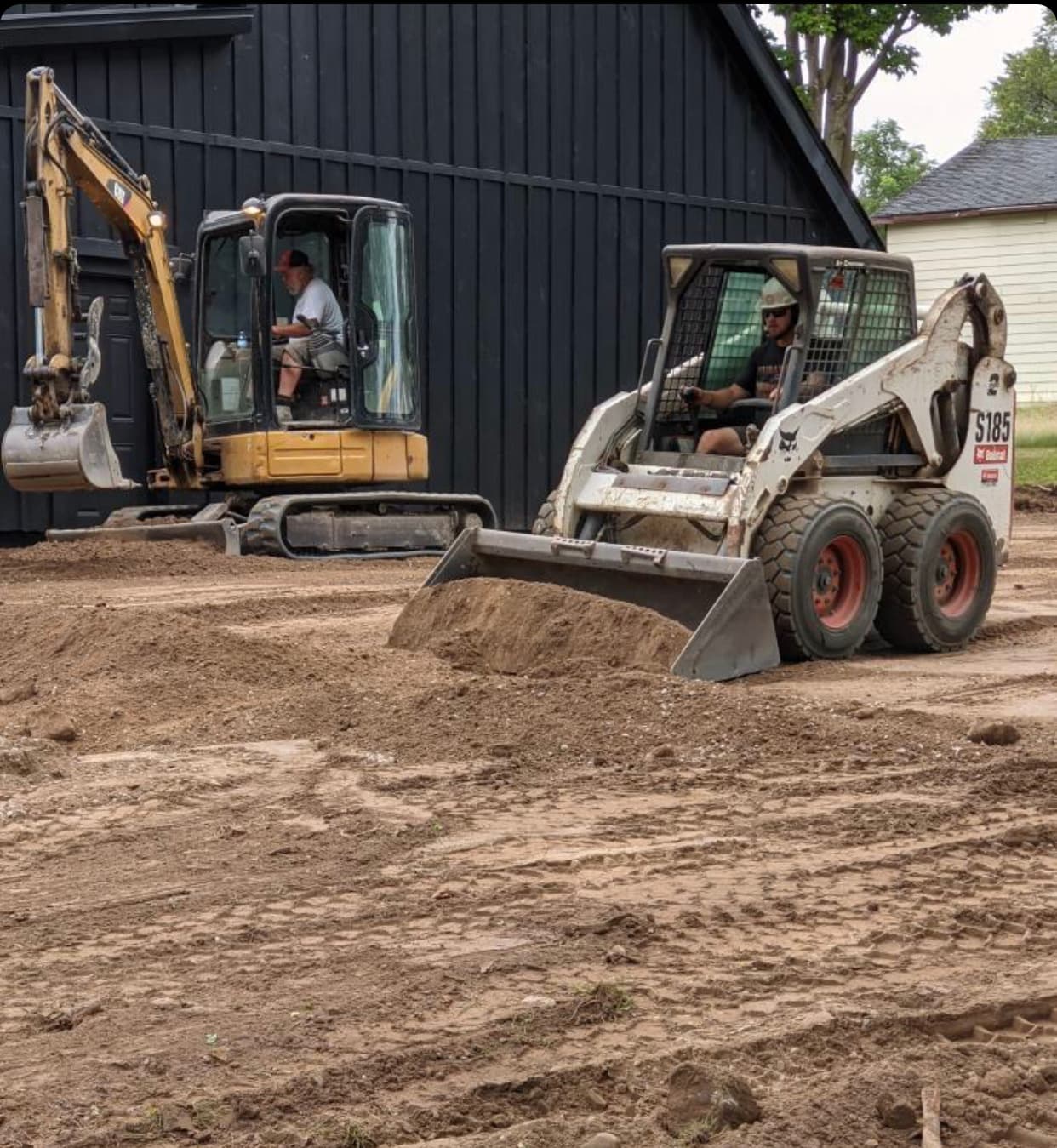
Small residential projects might need nothing more than a mini excavator and a skid steer. Large commercial sites might have six or eight different machine types running simultaneously. The experienced contractor knows what to bring, which cuts down on delays from having to source additional equipment mid-project.
Safety Regulations In Excavation Work
The safety requirements around excavation work exist because the consequences of ignoring them are severe.
Trench collapse is probably the most well-known risk. A cubic yard of soil weighs somewhere around 1.5 tons. An unprotected trench wall doesn’t give you a warning before it comes down. The 5-foot rule requires that protective systems be used for trenches or excavations deeper than 5 feet to prevent collapse. This OSHA safety standard ensures workers are protected with proper sloping, shoring, or shielding.
Underground utility strikes are the other one people don’t think about enough. A mislocated gas line or live electrical conduit turns an excavation project into an emergency fast. The locate process before digging begins isn’t bureaucratic box-checking. It’s what keeps people from getting hurt.
What Happens Before Excavation Begins?
There’s more pre-work than most clients expect, and most of it happens before any equipment arrives.
The site gets walked and assessed. Soil conditions, drainage patterns, existing vegetation, and access routes all factor into the plan. Utilities get located and marked. This is non-negotiable before any digging happens.
Soil testing is necessary to determine the soil’s composition and stability and to ensure that there are no underground utilities or other hazards that could cause problems during the excavation process.
Permits get pulled. On most residential and all commercial excavation projects, permits are required before work starts. Equipment and crew get scheduled. Site access gets assessed to confirm what machinery can actually reach the work area. The contractor coordinates with the general contractor, the engineer, and any other trades whose work the excavation will affect.
By the time the excavator starts moving dirt, a significant amount of professional work has already happened. Most of it invisible to anyone who isn’t directly involved.
How Long Does Site Excavation Take?
The timeline question gets asked constantly and answered vaguely almost as often. Here’s the honest version.
Simple residential excavation work on a clean site with good access and no subsurface surprises can be done in a day. A full site prep package for a new residential build usually runs somewhere between three days and two weeks depending on what’s involved. Commercial work varies too much to generalise meaningfully.
What matters more than the headline number is how the contractor handles the unexpected. Construction plans look neat on paper. The ground rarely stays that neat. Experienced crews adjust rather than stopping everything when conditions change mid-project.
A contractor who builds reasonable contingency into their timeline and communicates clearly when conditions affect the schedule is far more valuable than one who promises a hard date they can’t keep.
Signs You Need A Professional Excavation Contractor
A few situations make the decision pretty clear.
You’re building anything permanent. The ground under a permanent structure needs to be prepared correctly the first time.
The site has drainage issues or problematic soil. These are not problems that fix themselves and they’re not problems that a non-specialist is well-equipped to solve.
The work is near existing buried utilities. This one is a safety issue before it’s anything else.
Excavation contractors play a pivotal role in construction projects by clearing sites, removing debris, grading land, and preparing it for building. They collaborate closely with general contractors to schedule equipment and crew, ultimately shaping the ground for sturdy building foundations.
The cost of professional excavation is real. The cost of undoing the damage from unprofessional excavation is usually higher.
Questions To Ask Before Hiring An Excavating Company
The questions you ask before hiring an excavation contractor are how you find out whether you’re hiring someone good or someone who just has decent-looking equipment.
Are you licensed and insured for this type of work in this area? This one is not optional. If something goes wrong on your property, you need to know you’re covered.
What’s your experience with projects like mine specifically? A contractor who has built a career on commercial road grading is a very different hire from one who has spent years on residential site prep. Both might be excellent at what they do. That doesn’t mean they’re both the right choice for your project.
How do you handle unexpected conditions on site? The answer tells you a lot. Experienced contractors have a process. Less experienced ones often don’t.
What does your quote actually cover and what isn’t included? Permit fees, soil disposal costs, drainage materials, and base preparation are all real costs. A quote that doesn’t mention them probably hasn’t accounted for them either.
“That invisible, unnoticed performance is what experienced excavation contractors deliver…”
Most people on the finished project will never think about the excavation phase at all. That’s exactly what good excavation work looks like from the outside. The drainage works without anyone noticing. The foundation sits on stable ground without anyone thinking about it. The utilities are exactly where they’re supposed to be.
That invisible, unnoticed performance is what experienced excavation contractors deliver when the work is done right. It’s worth taking the time to find one who knows what they’re doing.
Have Questions About Your Project?
Our team of experts is here to help you make the right decisions for your property.