
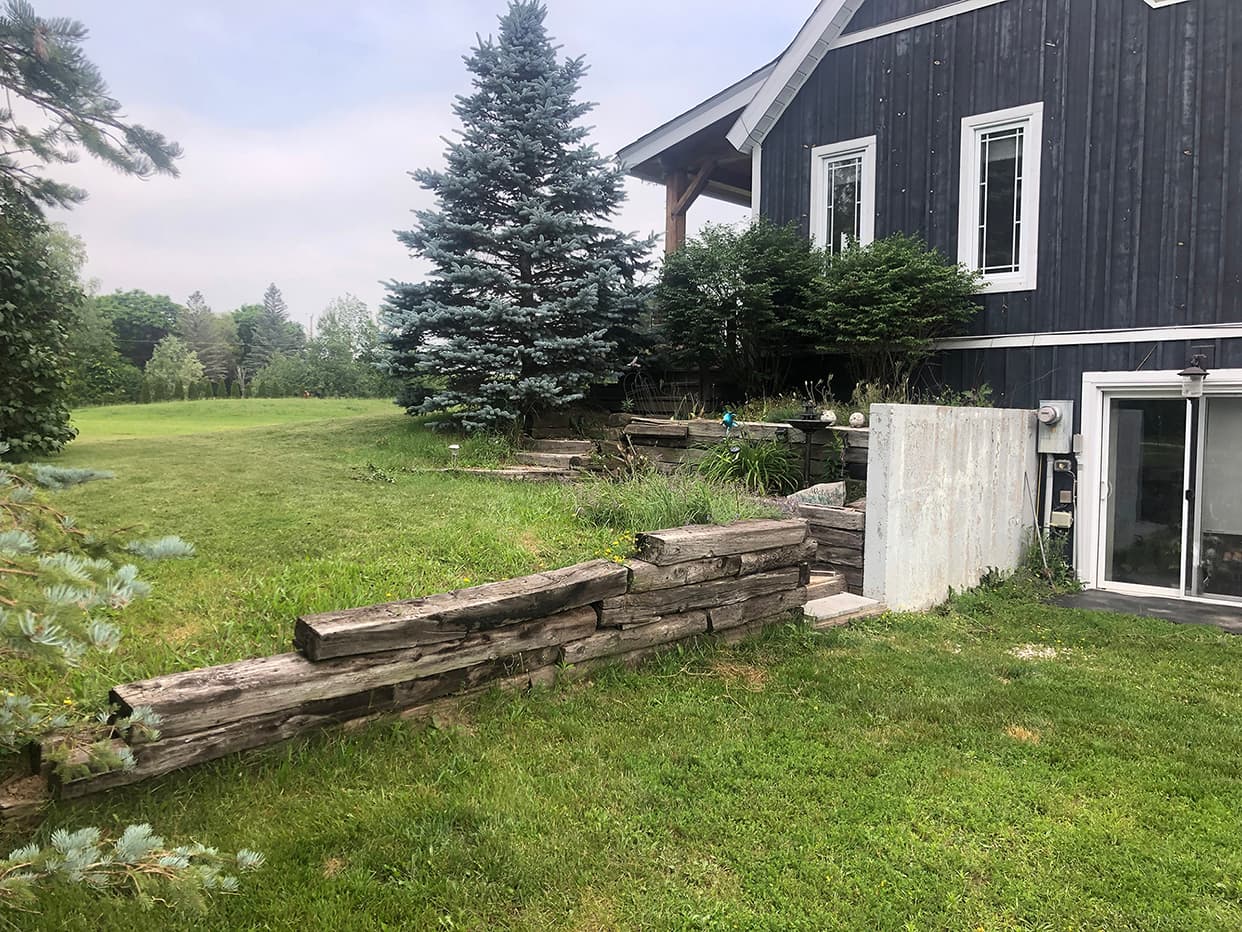
Why Cheap Retaining Wall Materials Can Cost You Double in Maintenance: A Contractor’s Honest Breakdown
Most people pick retaining wall materials the same way they pick most things: they look at the price tag and go from there. It makes sense on the surface. Why spend more than you have to?
The problem is that with retaining walls, the upfront price and the actual long-term cost are two very different numbers. A material that saves you money on day one can quietly become the most expensive decision you made, in repairs, replacement, and everything that goes wrong in between.
This guide breaks down what the different retaining wall materials actually cost, how long they last, what they need to keep working, and which ones are worth the investment. No sales pitch. Just a straight look at the numbers.
What Is The Strongest Retaining Wall Material?
From a pure structural standpoint, reinforced poured concrete leads the field. Poured concrete walls are often regarded as some of the most enduring options available for creating strong barriers, and owing to their robustness paired with low maintenance demands, they stand out as an exceptional choice.
Natural stone takes a different kind of strength. Not engineered force resistance, but longevity. Stone walls built with proper footings and drainage routinely last well over a century. Mortared natural stone has a documented lifespan of 75–100+ years with low maintenance, making it one of the strongest long-term performers across both durability and maintenance.
Which one is stronger depends on what you mean by strong. For load and pressure: concrete. For lifespan and low intervention: stone.
Comparing Retaining Wall Material Costs
The cost range across retaining wall materials is wide, and the difference between options isn’t just about aesthetics or quality. It reflects genuine differences in what you’re getting.
Retaining wall installation costs $3,194 to $9,200 for a two-to-six-foot wall, depending on height and material. Within that range, material choice is one of the biggest variables. Timber pulls the cost down. Natural stone and poured concrete push it up. Concrete block sits in the middle and handles most residential situations well.
The number that matters more than the install cost is the cost per year of useful life. A wall that lasts twice as long for 30% more money is the better deal. It just doesn’t look that way on the initial quote.
Concrete Blocks Vs Natural Stone: Which Lasts Longer?
On pure lifespan, natural stone has the edge, and it’s not a small one.
Natural stone walls last 75–100+ years, the longest documented lifespan of any standard retaining wall material. Concrete block, installed properly, runs 40–75 years. Both outlast timber significantly, but there’s a meaningful gap between them.
The practical question is whether the additional lifespan justifies the additional cost. For high-visibility areas, premium properties, or situations where you genuinely don’t want to revisit this project in your lifetime, stone makes the case. For most standard residential applications, concrete block delivers a long, reliable service life at a more manageable cost. Timber is cheapest upfront, but concrete block offers the best balance of affordability and lifespan.
Best Retaining Wall Material For Sloped Yards
Sloped yards ask more of a retaining wall than flat ones, and that affects which material makes sense.
The main concern on a slope is combined pressure: soil load plus water movement. A material that handles both well is what you need. Concrete block and poured concrete are the most reliable performers here. Stone works well where the slope is moderate and aesthetics matter. Timber is the riskiest choice on any significant slope because it degrades faster when moisture is consistently present, and on sloped sites, moisture management is always a factor.
If the ground is sloped, there’s substantial additional labour involved, which can increase labour costs by 50% or more, with contractors needing to do significant extra excavation to build step-downs or to terrace the slope to accommodate a safe retaining wall. The material you choose also affects how that additional work gets done.
Drainage Mistakes That Destroy Retaining Walls
More retaining walls fail because of drainage than because of material choice, structural design, or anything else. It’s the most common problem and one of the most preventable.
The most common cause of retaining wall failure is poor drainage. Water that accumulates behind the wall increases pressure and can cause cracks or collapse, especially in materials like wood or concrete blocks.
The mistakes that lead here are usually simple ones: no gravel backfill, no drainage pipe at the base, weep holes that get clogged and never cleared, or a wall built without anyone considering where the water coming off the slope above is actually supposed to go. Each of these is avoidable with proper planning. None of them are expensive to get right upfront. All of them are expensive when they cause a wall to fail.
Retaining Wall Height Rules And Permits
Height is the factor that most often determines whether you need a permit, and a lot of homeowners find this out after the fact.
The International Building Code requires permits for earth-retaining structures over 4 feet specifically because failure risks jump dramatically at this threshold. In practice, many municipalities set the threshold at three feet. Some require permits regardless of height if the wall is near a property line or an existing structure.
Most municipalities or counties have requirements for permits for a retaining wall beyond a certain height, usually three or four feet. Avoiding the permit process can result in hefty fines, required removal, or legal action.
Walls above four feet also typically require engineering involvement, a licensed professional who can assess the soil conditions, specify the materials, and sign off on the design. This adds cost and lead time to the project, but it’s not optional where the requirement applies.
Common Retaining Wall Failures Homeowners Face
The failures homeowners run into most often come from a short list of recurring causes.
Drainage is at the top. Retaining walls are not maintenance-free; drainage outlets clog, minor erosion occurs, and vegetation grows, and ignoring early warning signs such as cracks, bulges, or ponding water allows small problems to become major failures.
Base preparation is the second most common issue. A wall without an adequate foundation shifts as the soil beneath it settles and moves. Inadequate reinforcement, particularly in taller walls, leads to the gradual outward lean that signals the structure is carrying more than it was built to handle. And then there’s the permit and engineering issue, walls built without professional input in situations that warranted it. Red flags warranting professional involvement include prior wall failures on the property, plans for multi-level terraces, or uncertainty about soil conditions. Read More: Retaining Wall Maintenance Tips
Environmental Impact Of Different Retaining Wall Materials
The environmental picture for retaining wall materials breaks down mainly around production impact, chemical treatment, and end-of-life considerations.
Natural stone produces the least concern across all three. It’s quarried rather than manufactured, carries no chemical treatment requirements, and is indefinitely durable. Concrete involves higher production emissions but is long-lived and partially recyclable. Timber is renewable at the source but often chemically treated, and it degrades faster, meaning more frequent replacement and the waste that comes with it.
For projects near vegetable gardens, water features, or ecologically sensitive areas, these distinctions matter more than they might on a standard residential build. The material that lasts longest generally has the lowest environmental cost over the life of the wall.
Best Retaining Wall Base Material For Stability
Whatever material the wall is built from, the base it sits on determines how long it stays where it was put.
Compacted gravel, typically crushed stone in the 3/4-inch range, is the standard base material for most block and stone retaining walls. It compacts well, drains well, and gives the first course of the wall something stable and level to sit on. Poured concrete walls use a concrete footing instead, sized and reinforced to match the load the wall will carry.The backfill behind the wall deserves the same attention as the base beneath it. Using the wrong type of backfill or failing to compact it properly can lead to structural issues; well-graded gravel or crushed stone should be compacted in layers to ensure stability. Getting both right at the build stage is far less costly than addressing either after the fact.
Which Retaining Wall Material Requires The Least Maintenance?
Low-maintenance retaining wall materials are ones that don’t need much intervention to keep doing their job year after year.
Poured concrete is probably the lowest-maintenance option in practical terms, occasional inspection for cracking, periodic checks on drainage outlets, and that’s largely it. Once installed, concrete walls require minimal upkeep aside from occasional inspections for cracks.
Natural stone is similarly undemanding once the wall is established. The mortar in mortared stone walls may eventually need pointing, but that’s a minor and infrequent job. Concrete block sits in the middle; well-maintained block walls need little attention, but the joints and caps should be checked periodically.
Timber needs the most active maintenance of any standard material and has the shortest lifespan regardless of how well you look after it. For anyone who wants a wall they can genuinely forget about, timber is the option most likely to disappoint.
When Should You Hire A Professional Contractor?
The DIY appeal makes sense; labour is a significant chunk of retaining wall cost, and a simple garden wall isn’t rocket science. But knowing where to draw the line matters.
Walls under three feet, on flat or gently sloped sites, away from structures, and with straightforward soil conditions are reasonable candidates for a competent DIY approach. Once you’re past any of those conditions: height, slope, soil complexity, proximity to structures, the risk of getting something wrong outweighs the labour saving.
Effective walls require quality blocks or stone, proper drainage, and good base preparation. On smaller budgets, designs that are less complex save money without sacrificing structural integrity. A contractor who does this regularly brings knowledge about local soil conditions, drainage requirements, and what actually holds up in your specific climate. That knowledge is difficult to replicate from research alone, and on a structural wall, it’s what stands between a wall that lasts and one that fails.
Build It Right Once
If there’s one thing this breakdown points to, it’s that retaining wall material selection is really a long-term cost decision, not a short-term one.
The materials that look expensive upfront often look like the sensible choice five or ten years in. The ones that look like savings at the quote stage have a habit of generating their own costs over time. Getting drainage right, preparing the base properly, matching the material to the soil and load conditions, and respecting height and permit requirements. These are the things that determine how the investment performs.
Build it right once. That’s almost always cheaper than building it twice.
Have Questions About Your Project?
Our team of experts is here to help you make the right decisions for your property.